I like some creators’ concepts a lot, but ironically, I’m not passionate about their music. And those artists’ music that I find exciting for stylistic or other reasons, often have a concept behind them that I can’t associate myself with – or have no concept at all.
This brings up an interesting question about the relationship between concept and taste. Should a piece of art that you find interesting have a concept that you can relate to? Does a concept that greatly interests you guarantee that you will like the art that’s formed around it? I certainly don’t think so. Yet, concepts can make a piece of art much stronger and more timeless. Concept albums ideally sprout from the exploration of feelings or ideas, opinions or facts, and express them through one or another art form. I say ideally, because technically we shouldn’t call an artwork concept-based if the work was retrofitted with a concept after it was created, but in some cases the realization or idea of meaning might actually come during or after the creative process.
Concept vs. Style
So how is it possible that I keep finding myself on either side of this equation but rarely in the intersection of them? I believe that the answer is: evolution of ideas and an organic process to create originality.
I see the “lack of finding work right in the intersection” problem as an opportunity for a natural evolution into new territories, aspiration to create the new, that will belong to that intersection – at least for some. Let’s say you love what an artist says about his/her inspirations, creative process, concepts that their music is expressing, but you don’t care for their music. It happens to me quite often that someone describes their ars poetica or creative process, which makes me excited to hear their music, but when I hear it, the music doesn’t resonate with me at all and I stop listening with disappointment. Artists, like all humans, subconsciously build their previous experiences into their own work; so what do creators do when they get inspired by a concept, feeling or idea but don’t agree with its expression? They create their own version to express it their way! Or create a variation of it. Or (sub)consciously build it into their own concepts. Either way, the result becomes something new. Like a story that gets embellished with lines borrowed from other stories and told differently every time. After a while it becomes a different story, filled with diverse roots and influences. Once you tell your own story (concept) your own way (musical expression), it should become a perfectly matched intersection between feel/idea and musical expression – at least for one listener: you. And when publicly released, the work can continue the process of influencing others by its concept (message) or by its design (music).
Is having a concept a must?
What about great music with no concept whatsoever behind it? As much as I appreciate original compositions and unique sonics (the value or originality in these is actually even measurable to a degree), I don’t think that it’s enough; I just don’t think that a conceptless album is as strong of a piece of art as the same release with a concept can be. After all, music is the most universal language (no, it’s certainly not math!) – but just beautifully speaking that language while having nothing to say isn’t appealing to me. However, once it’s expressing a message (whether abstract or concrete), the mix of that message and its expression can trigger a reaction with our own feelings (memories), which in turn can modify the intended meaning of the concept. It can effect us differently from the way it was meant to – isn’t that the basis of progression, though? Isn’t it beautiful how mutually influential the elements of concept and style can be?
One of my teachers in elementary school said, as the class was analyzing a poem, “What matters is not if you know everything about the circumstances in which the poet wrote this poem and you can analyze what he meant by every line. What matters is what the poem means to you.” So true. If it means something to you, if it effects you, it was worth creating it.
Ironically, I used to say quite often that my life is all about music, composition and sounds. Now 39 years into it I feel that music is “just” a tool, although an extremely powerful one, that we can use to communicate emotions and concepts with. However, those feelings and ideas should exist in us in the first place.
Art forms influencing each other
Another aspect of this theory that fascinates me is the cross-influence between various forms of art and expression. For example, a photograph at an exhibition might have a certain emotional effect on me. This emotion, combined (usually subconsciously) with my own related feelings can result in a new feeling, which then I express (and let my audience experience) – but not necessarily through photography, but music. Or sculpture. Or another expressive form. Thematically there might be no detectable link between the original photograph in the museum and the music track on my album, but the emotional connection (translated by my own experience of those emotions) might be extremely strong. In fact, it can be stronger than just to call it influence – it might be a variation of the same message (but without any relation to the way it was expressed by the original photographer). We could even think of it as my personal musical score to the original photograph – without having an understanding of how the photo made it’s photographer feel in the first place. But without that photo, my expression of it wouldn’t exist either.
Based on this thinking it might be unsurprising that many composers (myself included) are more influenced by other forms of art than other pieces of music. (I’m actually working on an “influence gallery” for this very website.) I believe that influence should be more about a new interpretation of the concept, the feeling, the idea (of another type of work or experience), than the kind of musical expression (style, melody, etc.) that was used to bring it to light and which you might like. Again, a photo or a country song with a strong concept might have a bigger effect on the originality of my work in electronic music, than hearing electronic music with a similar style to mine. In the latter case, I’d be more likely to subconsciously copy elements of expression (melody, harmony, rhythm, texture, performance), as opposed to be thematically influenced by an idea.
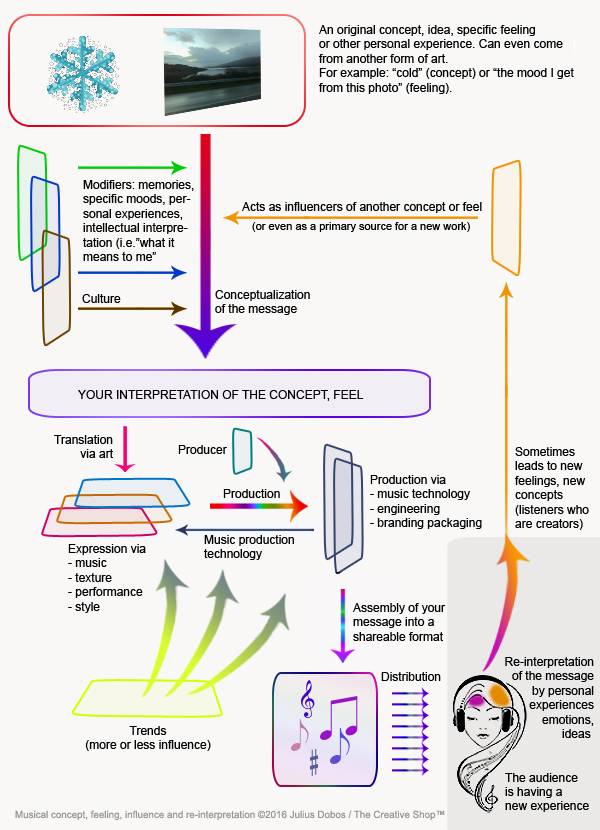
Musical concept, feeling, meaning, influence and re-interpretation. The relationship between concept albums, creators and audiences. (click to open large)
So then why do interviewers always ask about our musical influences? Isn’t that just asking about the wrong side (the language, not the story) that you might have grown up with and actually can’t get out of your subconscious? If anything, that kind of influence is actually a narrowing factor in the originality of your expression, rather than an actual influence on your message. When listening to me speaking about my music, wouldn’t you be more interested in what stories, feelings, ideas we might have in common, than what kind of music we both grew up with or enjoy listening to (the “packaging” we both prefer before we unwrap the message)?
You will see another funny thing when you look at the middle area of the diagram on the right. The parts that many producers, writers, etc. focus on the most is technology. While production technology (i.e. recording software, the engineering, the studio) can greatly influence the musical expression (hence the dark blue arrow pointing left, back from production to expression), it is a relatively small part of the overall journey, and this reverse direction (using the technology as an idea-generator and not as a tool to translate one) can even be responsible for a disconnect from the original concept… just think of those instances when a suddenly found “cool sound” caused your work to deviate from the originally intended feel.
My conclusion – and advice
Understand your own message but do let yourself be influenced by others’ interpretations.
Don’t let technology interfere in impressive but irrelevant ways – experimentation is fantastic as long as it is purposely channeled towards enhancing your initial concept.
Rather, be open to get influenced by experiences, concepts, feelings coming from other forms of art than yours. Unlike those “how to break writer’s block” articles that tell you to listen to more music of your peers, or copy the style of other composers, I suggest that you first figure out what you want to say and focus less on how you want to say it. A strong concept will inspire the “how”-s automatically.
I am ready to make a few unusual and some expected commitments for the year 2014. Although these are coming from personal realizations, opinions and circumstances, I’ve decided to share three of them with my audience (with some explanation included), hoping that some of you might find them inspirational (or thought provoking) and applicable for your own life or work. Plus, putting them out for listeners from all over the Planet to read will force me to actually stick to them…
Resolution #1: I will not purchase new software or hardware
This is actually harder than it sounds. Trying to leave my “gearhead” past behind, it might not be possible to simply ignore new developments and cool products. But, even though I won’t unsubscribe from the 20+ music technology related e-newsletters I am receiving on a weekly basis, the real challenge will be making the decision notto purchase the latest and greatest equipment or plugin. Why? I could simply say “I have more than enough gear in Studio CS” (and this would be the truth), but then you would say (if you’re a gearhead): “You can’t ever have too much gear!”. As I used to think the same, it might need some explanation why I think otherwise these days.
The less gear you have, the more you have to try: try to come up with unconventional solutions, try to get more out of what you have, try new and unusual combinations and end up with new and unique outcomes. Less convenience makes you think and work harder. Faster processing and more memory, more software, bigger algorhythm do not mean better music.
There are so many examples to put this in a wider perspective. For instance, think about the computers NASA used in the ’60s and ’70s. Their most complex program was 6 MB and Apollo 11 was guided to the Moon and back to Earth by a computer with 64 KiloBytes of memory and a processor running at 0.05 MHz – about the speed of a pocket calculator. Yet it was enough to assist a mission that changed history. Or, think about the Synclavier or the Fairlight CMI sampler of the early ’80s, with their processor running at around 1 MHz, both were responsible for amazingly realistic sounds in the works of many composers of the day.
I look at software similarly. Typically, what you will find in the newest versions, latest upgrades, is convenience. New features and functions might be marketed as “new capabilities”, but in fact, I have not come across any “new capabilities” for several years now, any features that wouldn’t have been possible to achieve before – usually in more complex but also more flexible ways. Whether we’re talking about new variations of formant synthesis, sequenceable effects processing, automation matrix or other “this will triple your creativity” gimmicks, it’s been all out there for those who choose to go beyond clicking on preset buttons – and it’s been around for a long time. This makes me think of the good old times that I was spending in front of the early version of Cubase (the whole program fit on four 3.5″ floppy discs), being more productive than ever.
I believe that we have passed the point where the advantage of the accelerated technical progress was practically measurable in most fields (the medical profession might be one of the exceptions). While more or less following Moore’s law, technological advancement is accelerating exponentially, in my opinion the benefits are only advancing logarithmically (the pace of change of the effect is decelerating). This brings the latest 64-channel theater surround sound systems to mind – as impressive as it sounds, I wonder how many listeners will perceive and actually enjoy its benefits over today’s 9.2 systems (knowing that most people can’t even distinguish a 5.1 from a 7.1 experience).
So, do we really need GigaByte-sized operating systems and TeraBytes of samples to create amazing sounds and music? (And let’s not even open up the analog can of worms here.) Taking this a step farther in light of the Apollo example: does the world need faster and faster technology to make history? Do we need to run fast to get farther and see less, or rather slow down and enjoy the journey? As for me… using technology as an occasional aid, it’s time to enjoy a healthy mix of the easy-to-miss wonders of yesterday and the creative challenges of tomorrow.
Resolution #2: I will use my smartphone less
I do like the “everything at one place” aspect of smartphones. I appreciate the practicality of the minimalistic algorhythm and small application size that runs on them. But I hate that they are leading the way in letting technology drive and schedule our lives, instead of inspiring us to free up time we spend with daily routines, and replace it with real productivity. Everyone knows by now how companies love to provide cellphones to their employees (to effectively extend their work hours without pay). But people are equally at fault. How many times do you check your phone a day? Some statistics say the average user does it 23 times, some research mentions numbers over one-hundred… either way, it’s too often. What’s the point of checking your emails, social networking status, weather, etc. constantly? How come no one felt being left out of the loop 15 years ago when launching your email once in the morning and once in the evening was enough? People still networked, and actually kept relationships more personal and reliable.
I do not want to waste any more time than I must with these routine tasks and I do not want to let technology become the purpose, rather than the tool. If I save only 3 minutes on average by turning on my phone only 10 times less a day, that’s already half an hour a day (over a full week per year!) that I can use my time for more useful activities. Let’s be the smarter one of our phones and ourselves.
Resolution #3: The New Album…. I will finally finish it and it shall be released.
My original plan was that first time in my life, I can spend all the time I want to compose music and sounds for my 8th studio album – one that is especially close to my heart. I even proudly shared my “no deadline” approach with some of my friends and students: “if it takes many years, then it takes many years… I won’t release it until I feel it’s near perfect”. The process started in 2009, and had no planned release date. After I delayed the release date several times, I have come to realize: what sounded good in theory, wouldn’t work in practice, for at least three reasons:
1. I’m never 100% satisfied with the mix of my own works, so technically the album will never be 100% finished. I just have to accept 98%. And due to the nature of music production, it takes about the same amount of time to get form zero to 98% as much it takes to get from 98% to 100% – there is always something to improve. Often I’m not even sure if I’m really improving on a detail or just moving over horizontally to explore another option. So those last 2% just aren’t worth the time.
2. Having been receiving your questions about the release date from all over the Planet at an increasing rate made me finally realize, that I owe it to my listeners to put out the new materials in a reasonable time. Working on my music by myself for too long is not only exponentially less productive (see above) but also exponentially more selfish.
3. Not wrapping up the first album (of my new concept album series of 4 albums) will prevent me from moving on, shifting my thoughts to the second topic and start working on the 2nd album.
I take this opportunity to thank everyone who inquired about the new albums and ensured me of their support. I’ll be proud to have you as a VIP passenger on this musical journey in 2014.
“What’s wrong with not being original?” – asked the celebrity and stepped back into his mansion.
Too Many Options
Brian Eno once said: “What you need are fewer possibilities… that are more interesting. It’s not more options that you want, it’s more useful options”. I think this is more true today than ever, and I might add: those few useful options will often come from the least obvious sources. So you want to be different, express your individuality, your personal message, come up with original content? Think about how you could make your process simpler. Think about how you could use gear that not everyone uses (sorry, NI). Restrict your convenient options – set up rules that prevent you from taking the same route from idea conceptualization to production twice. Work within these new set of rules, then destroy them and create new ones. Give up as much convenience as much you can handle. Let me know what results you have achieved.
When it comes to gear or software, there is a certain temptation for many of us who like diversity in sound generation and processing, to have lots of it. However, the truth is that you have to allow time for yourself to grow up to your gear. It’s kind of like a friendship. To make new friends every week and spend thirty minutes weekly with each new friend will less likely result in a strong friendship, than meeting fewer people and getting to know them better. Which situation do you think will get you farther, a lot of acquaintances or a few close friends? So, after you have gotten to know your gear down to the smallest details, let yourself run out of the obvious options; that’s where the real discovery starts. The reward comes when you start taking different than usual approaches to achieve interesting results. I’m not talking about ignoring the presets here, I’m referring to more or less ignoring the whole system (long live Anonymous!) – the methods by which the instrument or piece of equipment is supposed to be used.
I realize that I am also guilty of surrounding myself with too much gear. I remember the times when I had a very small studio and I was able to operate it with my eyes closed (literally – even navigate in sub-menus of certain equipment). Some of those pieces are still part of Studio CS today, and I keep on finding new and interesting ways of using them. On the other hand, I still have a lot of experimenting to do with my current setup, to venture into the sonic excursions I haven’t taken before. Not only I refrain from using any presets, but I’m rarely satisfied with the results that come from the “normal use” of these pieces of gear. Ultimately, I often gravitate back toward using the equipment I had developed a more in-depth “relationship” with. (A neat example would be my Yamaha PSR-6 synth, which is basically a toy that I had bought on eBay for $20, to bring back the memories of my first childhood keyboard, a PSR-2. Today, it certainly does sound like a toy, yet those sounds are part of game menus and movie soundtracks you might have already heard… yes, a $20 synth in major productions. Other sounds from this “toy” even found their way into my upcoming album [edit: the already released forgotten future], after some multi-tracking and lots of processing. Makes me think of pointless conversations about 192kHz and the need for pristine-sounding elite preamps…
This is not to say that less is always more. Although, if you are a new, aspiring composer or producer, less is definitely more, more becomes more after (many) years of use experience. With the friend analogy, once you have a few really close friends, why not have a couple more who you can get to know just as well? But it definitely takes thousands and thousands of hours to get to the point where one can utilize a studio full of equipment in a truly original ways. Most gearheads think that it would be so cool to take over a professional studio for a week… imagine what would happen if you had all the gear you can imagine at your disposal? There is a great (I believe Hungarian) phrase to describe it: “the abundance of confusion”. Probably you wouldn’t get much interesting music done, unless you resorted to using a couple of pieces of gear.
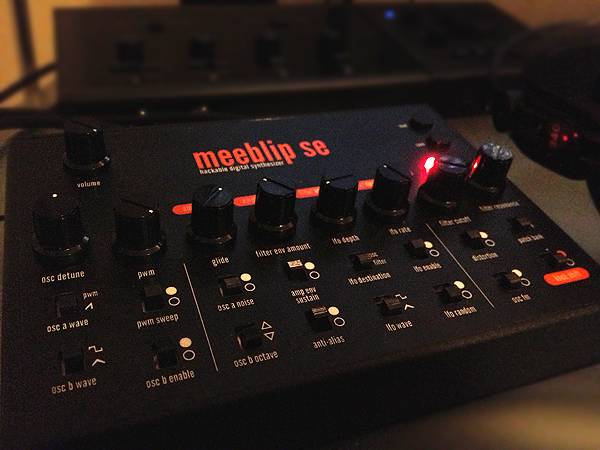
Reflex meeblip SE – it doesn’t get much simpler than this, you would think. Actually, with an interesting combination of processes, even this simple piece of gear (the simplest equipment in Studio CS) is capable of reaching a wide range of unique sonic territories.
Several years ago I actually went through a period when I couldn’t get the music in my head realized the way I imagined – for a few months, none of my sessions were productive, at least by an elevated standard of originality. It was quite frustrating: sitting in the studio full of equipment, with ideas in my head (so not a “writer’s block”), yet I wasn’t able to get my idea to the point of solid realization. I thought I was ready to use a great diversity of technology simultaneously – turns out I wasn’t. After many lost session, I solved this issue by temporarily eliminating most of the equipment from my process and using only a couple of pieces. It worked great. Then I would designate a couple of months to work only with a very limited set of equipment, to get the most out of each piece according to my given needs. You would think of this masochist method as restrictive, but it was quite the opposite. After years of working this way, I have almost grown up to Studio CS and developed a really good yet different “connection” with each piece.
Lack of true physical connection
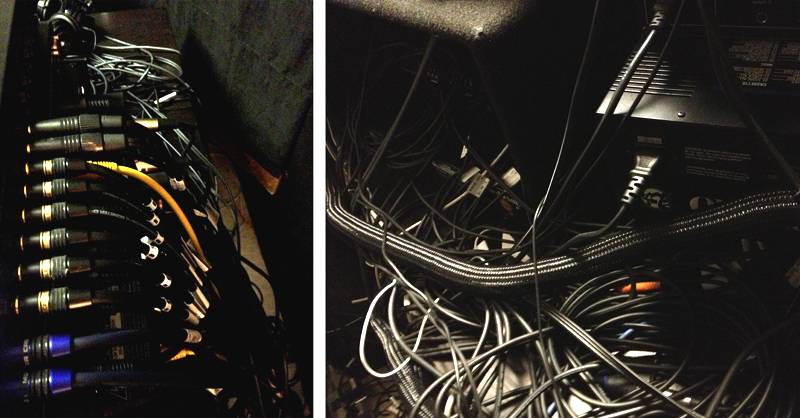
Cables. They’re great. They let you be modular. They let you break rules. They let you hold your sounds and music in your hands while you’re deciding where to send them next. Cables stand for hands-on, physical connections and outboard gear. No plugins, no mouse, no updates, no launch errors, no forced upgrades. They represent the real stuff, something tangible. Virtual connections are just like software – flexible, convenient, but try to grab the ones and zeros they are made of. They don’t exist. Cables definitely do… and have something physical on both ends. A tube compressor. An analog synth. An effect pedal. There is nothing wrong with using virtual connections, but at least, try to combine the best of both words and keep some real cables in the part of your signal path that you wouldn’t even think could be used creatively.
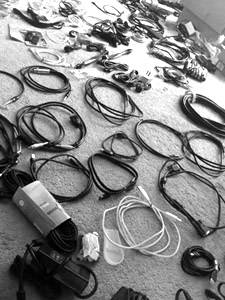
Spare cables with undetermined purpose laying around before my recent studio relocation. I love cables; in my mind, they represent flexibility and provide an experience to music production that’s as far form a mouse pointer as it gets. Sure, they’re messy. So is cooking, as opposed to junk food from the drive-thru.
Speaking of physical connections, I have to mention the very interface we use to input music into our sequencers or recording software. These days we use software for most everything, and from year to year it takes less and less effort to interface with computers. The mouse is going out, leaving space for the one- and more finger-operation of touch screens. While I recognize their advantages and superiority over the mouse, I believe that they can’t yet replace (but rather complement) the act of physically touching actual 3-dimensional objects – in music production, these can be sliders, faders, buttons, knobs, dials, keys, keyboards, strings, sticks… you name it. The expressiveness we can transfer through, and the tactile feedback we receive from these objects is much more diverse than using a flat-surface touch screen for everything. We use a mouse or two fingers for browsing, email, work, shopping online, watching movies online… shouldn’t the process of creation be utilizing some different gestures than those that we use throughout the day anyway? No wonder that some of the electronic music instrument developers see the future of music technology in the way we interface with our instruments, rather than the sound generator itself. Robert Moog realized this early on, and focused on theremins before he re-started his synth manufacturing operation in 2002. Even then, his biggest new addition to the Voyager (relative to the Model D) was the 3-axis control pad. (More about the consequence of diverse interfaces and the advantages of physically generating and performing music in my Analog vs. Digital synths article.)
More analog and digital cables at Studio CS. Some connect synths to effect units, others connect seemingly unmatchable pieces of gear, taking the sound to a new direction.
Templates and signature sounds
Sometimes a computer virus can be a good thing. Of course, they are a curse when they strike just before you wrap up an important project and they wipe out your drive. But when you “only” lose the old files or templates you use for your projects, a virus can be a great benefit and have a healthy cleansing effect on your creativity. Having to re-create things or start from scratch in most cases ensures that you’re going to end up with different, often more interesting results, maybe better ones than what you would have gotten with your trusty templates.
In music, repeating yourself is too easy; it’s for the lazy and those who prefer convenience over originality (see quote on top). Of course, I’m talking about independent work – not industrial production work, like film scoring or mainstream songwriting, where safety, convenience, speed, trends and even imitation can often be more important (and better paid for) factors than originality; it usually doesn’t matter if the composer uses his or her template (or even “borrows” someone else’s), as long as it fits into the process: done as expected, submitted on deadline. For these quick and efficient type of projects, viruses can halt production and cause serious financial damage.
About a decade ago I stopped saving my sounds and settings into the synths and processors I created them with. I decided to deliberately cause this inconvenience for myself, to make sure that even when one of my previously used sounds would work well in a new piece, I would have to create a new, original one. I have not regret it a bit. Just think about the pre-digital times, when sounds, effects, mixing settings couldn’t be saved simply by pushing a button. How much more originality came from that era, when most sounds and most every piece of music was created from scratch, and was often impossible to repeat (perform) the same way. Originality wasn’t a goal artists were forcing, it just happened organically. Even the patch drawings (of settings) didn’t give the composer exactly the same results every time.
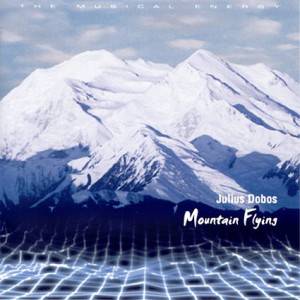
The only two exceptions from this practice are performances and signature sounds. If the style of a composer or producer is heavily characterized by the sounds or instruments used, sometimes it’s understandable if s/he wants to re-use these elements; that is, if the reason is not laziness but the desire to evoke the feel of a previous music piece, to create a link to an earlier work (hopefully rather an emotional, than a promotional link), or to perform the music live. For instance, I have kept three of my used-to-be signature sounds (they come from the time of Mountain Flying) but have used them maybe three times in the past 15 years. The main lead sound from Mountain Flying I, II and III had been quietly resting in a sound module for years before I decided to use it again for the lead part of Fly Away (on Transitions). Fans had been asking for a sequel to Mountain Flying, and though I was not intending to create a sequel album, one day in 2004 the track Fly Away was born. My old MF sound not only worked perfectly for the lead, but was largely responsible for bringing back the feel of the windy, snow-covered mountains from 1999’s Mountain Flying.
1999’s Mountain Flying CD Cover (Periferic Records original edition)
Signature sounds and live performances aside, I can only respect and celebrate those composers and producers who sound themselves but do not sound the same over and over again – especially in electronic music, where texture is a major building block of music. I suspect the same applies to painters, sculptors, graphic artists, videographers, animators, writers, poets and most everyone who creates original work – where templates can be the enemy of originality. Convenient, but limiting: they might not let you see different directions, take new approaches, change up the usual process.
Have you discovered some other not-so-obvious enemies of originality? Comment or let me know.
This year I finally realized, how insignificant and meaningless the NAMM show (the largest music- and audio technology exhibition) has become to me from a musical perspective. Most “new” products are all about either re-selling old ideas, re-creating vintage equipment from the ’70s & ’80s in a cheaper, plastic-y (but usually more amateur-proof, more convenient) package, or making complex or experience-based processes easy for beginners, so that they can get “professional” results with a push of a button, without needing to have a clue about what’s really happening in the background, and enjoy the results – which can sound just like their favorite “Major Artist” (more about this in a later post). So where are the truly creative products? Those that make you think and work harder to achieve genuinely different (dare I say: original) results, which will enrich the cultural legacy that we leave behind on this planet…? I can’t see very many.
Don’t get me wrong, I love to use technology; I have been using it for as long as I can remember working with audio and music (28+ years). The trend I’m really not interested in, and frankly I’m against, is how digital technology is making humanity lazier, easier to get impressed, but less skilled, way less creative, and ultimately less happy. We can’t even begin to describe the difference between how Schaeffer or Moog must have felt when creating something original, never before heard/seen, and how users feel today when they finally figure out how they can get to a menu in their newly upgraded software. I’m certainly not criticising the advantages that technology brings to the medical fields, to various sciences or to the military, and not disputing its benefits (at least for their respective users) either. My issue starts where technology becomes more than a tool, it becomes a way of thinking, a way of life: it becomes the purpose. The time when you start depending on technology to carry out fundamental human actions (cooking, entertainment, learning, creating art or simply being happy) and to interact with others (communication or expressing emotions in other ways), is precisely the point when it starts making you, and your creations, less human. I believe that a large portion of our society has already passed that point.
“Sure…”, you might think, “this is an old argument that I have heard many times”. I have, too, yet I don’t see that the majority would agree, and would stop supporting and praising the exponential technical “evolution” of the human race. Is it really evolution, when you become a technology-dependent user? I have been listening to some of my otherwise pretty smart friends for years, talking in awe about how fantastic their new xyz music production- or photography software is, because with it they can effortlessly and conveniently produce the “perfect” results (which, in my opinion, doesn’t exist anyway, not to mention that “perfect” should be a moving, evolving target, not a stationary idea). I understand that for those who can’t hum a tune or take a snapshot with a film camera, toys can be great; they let them play around and make fun things that otherwise they would not be able to. But, if you consider yourself an advanvced amateaur, not to mention a professsional… your goal should definitely not be making your pieces to sound or look like the mainstream, nor to get results in a convenient way thank to some dumbed-down processes.
I have recently watched the biographic movie of the late Joseph Weizenbaum, who realized the curse of AI (after spending the majority of his life as one of the pioneers who helped paving AI’s way), and in the same film, listened to the idiotic, demagogic (and surprisingly naive) monologues of self-proclaimed futurist, Ray Kurzweil. It’s a great documentary. Then, when further researching the subject, I came accross excerpts from the movie on YouTube, and sadly found that most user comments are blindly supporting Kurzweil’s ideas and are describing singularity as the ultimate human experience and heaven-like state achieved with technology. They just really don’t get it… does it seriously require so much of humanness in our hearts and brains to understand why you don’t want to become an always happy, “perfect” humanoid thing? Or, why it’s not a great idea to replace your good and bad memories with only positive ones, modified by ones and zeros custom-designed for you – and call it total happiness? I guess the “make it a good day” phrase would get a whole new meaning… Has Kurzweil not seen (or get the point of) Bruce Willis’ Surrogates? Instead of a “perfect” life for 150 years, I would personally go for a shorter one that is filled with realism and adventure – no question about it.
How ironic – from the ’60s through the ’80s, the “human machine” used to be a futuristic idea, which was different enough to be cool, but was not meant to be taken too seriously, at least not as a plausible and desirable future (nor did it take itself too seriously). From 1978 on, Kraftwerk’s Die Mensch Maschine let us imagine an alternate yet clearly fictional reality, it let us play the role of a machine – the keyword being play. Playing is imagining, imagining leads to creating. Creating means using our brain not to repeat, not to copy, not to imitate, but to invent what doesn’t exist yet, to express thoughts/feelings in ways that have not been expressed before, as each of us has a unique view. To enrich the human history with something that is fundamentally new and original, and human, something that wouldn’t exist without you or them or I creating it. Those were great times.
But, now in the 21st century, wealthy “futurist” tyrantopaths and powerful companies are actually making purpose-lost humans believe, that living a virtual or by-choice software-supported life is cool and that the convenience of imitation (as opposed to creation) is what will make everyone’s life better and happier. They state that a “perfect” human will have a “perfect life” (apparently they haven’t taken a look at depressed lottery winners, wealthy hardcore drug-addicts, alcoholic- and bankrupt celebrities, etc.). Hiding behind misused words (like creativity) and syrupy advertising (you can create anything), they are managing to convince a large portion of population, that by clicking around in a simplified, purpose-built software, the user can actually get really inventive and achive the euphoria of creating something totally new, that was only possible for those with some specialized equipment, extreme dedication and (too much) time a few decades ago. They’re smart marketers; “optical illusions have gotten old, let’s keep everyone entertained with the technical illusion (and make a few billions along the way)”.
What does all this have to do with the NAMM show and music composition/production? Technology in music has served humans really well until is was enabling us more to come up with new ideas than to replicate old ones easier. Just like in many other areas, it has become a simple, quick and cheap way for anyone to imitate ideas – ideas, which have been already conceptualized and executed a long time ago, by those who pushed the boundaries of their mind, not (just) the technology of their times. Those who got something more out of new technologies than the masses (think of tape recorders and musique concrete). Technology is not inspiring users to push the boundaries of originality in music or sound – despite of what your favorite music store’s email newsletter tells you. If you have listened to mainstream radio or have seen what’s been coming out of Hollywood for the past decade, you know what I’m referring to. (It would be nice to have a recognized and truly independent award for those rare exceptions).
I do think that there are no limits to the extent and form of originality that one can come up with in music and sound today, despite of the sheer volume of ideas that the entertainment industry has wasted as over-exploited musical products, which it shoved down the consumers’ throat, especially in the past thirty-plus years. Ideas are so much more powerful and diverse than technology is! I often tell my students not to let technology drive their creative decisions, but the other way around – the leaders of the music technology industry seem to be on the opposite side (unlike some exceptional, respectable small companies).
“I’m the artist of the future!” – Let’s make everything perfect, like on TV.
I urge programmers and software engineers to design products that help users to push the limits of our imagination, not the speed of the processors, and to contribute to the real progress of the human race, not products that make our lives overly comfortable and only seemingly happy. It might already be too late for that, as most users don’t realize how limiting this modern-day dependence actually is (try to get a sense for this dependence by turning off everything digital for a week in your house and at work), and they support it by favoring convenience and the illusion of their personal creative evolution, over creative thinking and hard work. This is especially true for today’s electronic music. Do unsuspecting users seriously think that the latest xyz plug-in that takes their sound closer to an [insert ‘major’ artist name] -track will open up their world of creativity and get their music launched into some brand new musical landscape? Do they seriously think that buying Native Instruments’ latest six-hundred-forty-million Terabyte sample library will help them to get their name written into the music history books? I hope you don’t. Real success happens when you are creating from your own, completely original ideas, your uniquely expressed feelings, personal experiences and memories that you turn into sound, music, image, etc., and when you let go of control and give space for happy accidents to happen.
According to Brian Eno, “Perfection is characterlessness”. I could not agree more. Throughout my career I have composed music both with the intention of creating “perfection” relative to industry expectations and trends, and also music not limited by particular guidelines or standards. I feel that my more predictable, more “perfect” pieces could have been created by many other composers… but those that were not born from the application of the established approaches, processes and techniques, but ventured off to take unplanned, untested directions while disregarding any routines or expectations, became the ones that would not exist without my existence – in turn, making my existence, and humble contribution to humans’ musical legacy, worthwhile.
My point? Next time when you’re enjoying the latest and greatest all-in-one easy-to-use music production software and feeling creative, challenge yourself by turning it off, grabbing a microphone and an object that you’d unlikely to ever record, or grab that $20 old toy synth (or other instrument with seemingly limited capabilities) from eBay, and start creating an experience. Instead of starting with a mass-produced algorhythm and your mouse, try some of the most human methods: discovery.
Singularity? The day when we trade our individuality for perfection – I despise that idea. We are alive as long as we are unique. Spending your money with companies that don’t sell you fake “creativity” but actually enable you to find your voice and ideas, will not only get you farther in your artistic endeavors today, but will help you to step on a currently unpopular road to an alternate, totally crazy, almost unimaginable and unbelievably human future as well: one with less perfection and less convenience.
“Analog, digital, virtual analog, software synths… which one is the best option? Which ones sound the best? This is one of the most frequent questions I get from my listeners, students and even friends from the music industry. So I thought I’d post my thoughts about this in a very condensed and non-technical form. Obviously, I won’t be comparing specific models or talk about the exceptions in this article, rather discuss the benefits/disadvantages of the four major categories in general (as for professional or advanced amateur studio use). So let’s go from the most fundamental to the more recent concepts.
Can a digital synth sound as good as an analog one?
Define good. A digital synth can sound horrible or it can sound way more interesting than an analog, depending on what type of sound and character you’re after. They both have strengths and weaknesses, and it simply doesn’t make sense to compare them without talking about some specific characters. For example, for sounds with a truly vintage character, for soft-saturation-rich sounds, for naturally unstable tones or somewhat uncontrollably fluctuating parameters, analog instruments will have an advantage, while most acoustic instrument imitations will sound quiet pathetic coming from analog electronic instruments. Besides actual samples of acoustic instruments, many digital synths will give you access to non-traditional parameters, diverse control options including MIDI, other than subtractive synthesis methods such as stable FM, PM, PD, additive, wavetable, granular, etc., and modeled analog component designs (algorithms), which might be unfeasible or practically impossible to build in the analog domain. So, get that old digital synth down from the attic.
Virtual analogs never sound as good as real analogs, right?
Wrong. Again, define good. The individual character of a virtual analog will likely come from different elements/attributes of the sound it produces than those of real analogs, and if that’s what you’re after, they might very well sound bigger, fatter, harsher, punchier than their analog relatives. Built-in effects may be available as part of the sound design process (as opposed to just system effects) in many of the virtual analogs (think of the Virus or the Supernova), and can often be controlled and routed in unconventional ways and interact with the more traditional attributes of sound. While virtual analogs will certainly have their own character, they will let you create sounds with a different character quite easily, as virtual analogs typically offer a large number of editable parameters, the non-traditional combinations of these, and highly flexible routing and control capabilities. Classic analogs have their individual character, which is fantastic, but might be somewhat more limiting when you’re trying to create sounds that don’t necessarily feature the typical character of a given model.
If you are using a VA and going for a classic”imperfection” (of steady pitch, amplitude, control and dynamic behavior) of a true analog sound, an often highly desirable character, you will have to imitate this imperfection by randomizing the value of several parameters– still, it just won’t be the same as the real thing. While the “warmth” of an analog synth can be described with an algorhythm and added to a virtual analog sound, a monotonously consistent (sampled) analog character or a digitally pre-programmed change of that character just won’t give you the same sonic quality and feel as the dynamically (and often randomly-and-dynamically) changing warmth and imperfection of a classic instrument. These exciting imperfections result from minor, unpredictable voltage changes, unrelated parameters’ coincidental effect on each other, use of a less consistently acting keyboard, difference in design (often no consistency there with hand-built models) and degree of stability between the oscillators, temperature changes, etc. Not to mention the unpredictable effect of a true analog instrument’s mood at a given time, i.e. what kind of day it’s having…
Do the new versions of vintage analog synths, those with fully analog signal paths (like the Voyager, MS-20 mini, OB 2-voice, etc.) sound the same as their original versions?
Comparison test (including my own) show that they never sound the same. First of all, most units of classic analogs don’t sound the same to begin with, while there is very minimal difference, if any, between the mass-manufactured units of today’s analog synths (with a couple of exceptions). These synths can be really great as their analog signal paths and components give you the raw, warm, forgiving, “pushable”, powerful sound you might like, but with character stability, digital control and convenient features (flexible routing, performance controls, MIDI, software interface, patch memory, etc.).
Yet, sounding different doesn’t necessarily mean that they sound better or worse. More stable, yes. The question is whether you like a more or a less stable tuning, and a more or a less consistent reaction (amplitude, pitch, filter amounts, dynamics, etc.) to your otherwise consistent performance. Whether you like a cleaner or a “dirtier” analog output? In other words, when recording it, do you prefer more of a “the same notes played repeatedly never sound the same” behavior, or a more predictable, consistent sound? If the latter, recently (post-2002) built analogs (or most VAs) will be your best choices.
Another factor that might greatly infuence your choice is the synth’s ability to store your patches or settings. Today’s analogs often offer this functionality – for most, this is a clear advantage (more about the rest of us at another time). Lastly, besides the differences in sonic character and features, classic analog, new analog, and virtual analog instruments feel entirely different as a whole; the materials they are made of, the feel of their keyboard and controls… and of course, we all have our individual preferences between numeric displays, hi-res lcd screens with lots of details – or no screens at all.
Softsynths are just like digital synthesizers, but thank to the host computer they run on, they have more memory, handle larger samples, have more polyphony, offer higher multitimbrality, feature better interfaces… overall they are just better.
As far as the specs: yes. Better overall: definitely no! It is true that the numbers make software synthesizers seem like clear winners (especially if you don’t plan to show them off on stage), but I would argue that they have at least two major disadvantages, even when compared to digital synths.
The smaller disadvantage is that the sound they create either stays in the digital domain, or gets converted to analog signal by the D/A converter of your computer’s sound card or connected audio interface. This might not be a disadvantage for one or two sounds, but when 10-12 different sounds come from 6-8 different plug-ins or software, and they all go through the exact same host application and the same hardware’s D/A conversion, they might (and often they do) get a bit processed, “homogenized” the same way. Think of this as an extra spice, an extra character, which becomes part of every one of your sounds, making them sound a little more similar to each other than they did before conversion. On the contrary, if you keep them in the digital domain (the sounds never leaving your DAW), or if you have a very high quality interface with highly transparent D/A converters, you will end up with no added character in any of your sounds, at least in theory. This might be exactly what you want, but personally, I prefer to get that little bit of an extra sonic diversity, as long as it comes from different D/A converters, pre-amplifiers and other components for each digitally generated sound. I have blind-A-B tested the digital (adat, s/pdif) and analog outputs of several of my digital and virtual analog synths, and in 80% of the time I preferred the analog signal. (Surprisingly, the 20% of these synths where I opted to use the digital output, were virtual analogs!)
This is not to say that the advantage of an analog signal is that it’s warmer, less sterile, or in any way better than the digital signal – in fact, in some cases it’s less “clean” and less dynamic. But, the analog signal is usually a bit more exciting, as its character isn’t as consistent as the digital signal’s more “always perfect” character. Letting favorable accidents (like analog distortion, signal degradation) happen can lead to unexpected (good or bad) character in your sound – and now we are talking about a creative element of sound shaping, as opposed to just sonic quality!
The other disadvantage of software synths is even more interesting, partly because it’s actually a difference between software synths and all types of hardware synths (not only digital), in other words, in-the-box vs outboard gear. It’s a less obvious yet HUGE difference that only a few uesrs think about:
The consequences of a different interface
Based on my experience as a professional electronic music composer and synthesist, and as an owner of dozens of hardware synths and a long list of softsynths, I can assure you that the differences in the way we control software and hardware synths differentiate them more from one another, than their sound or features ever could. While hardware synths might feature (ideally) a large number of switches, buttons, faders, sliders, dials, encoders, joysticks, software synth applications and plug-ins typically offer a streamlined graphical interface, showing the image of buttons, sliders, selectable parameter windows, drop-down menus and value fields.
Our physical connection with an electronic instrument plays an important role in musical sound design: being “one” with a familiar model often yields more diverse and interesting results. While “mousing around” on the screen and trying to access certain parameters in menus and sub-menus of a software synth can make the sound sculpting process way too streamlined, unintuitive and even frustrating, the literally hands-on operation of the hardware synths makes the user able to hear or imagine a sound or tonal character first, at the same time reach for a dedicated knob and take the sound to the just imagined direction instantaneously. No ideas lost or “textures in your mind” gone before your ears get to hear the changes in the sound – the mind is ready to take the instantaneously heard sound to a new direction in real time by directing the hands. This sensation of literally touching a parameter, this continuous two-way feedback between the two hands and the ear/mind ensures a highly creative and idea-inducing sound shaping process, which is largely or completely missing when one is using an indirect controller such as a mouse, is entering values, scrolling through menus. Even with a controller keyboard, you are limited to one particular interface, the controls of which were not designed with your particular soft synth in mind. We use the mouse for way too many things in our lives today, why make the way we control all of our instruments so uniform, too?
Although some awkward menus of small-display digital hardware synths might slow you down in the sound design process, they will still offer a direct hands-on experience, and a menu system featuring a different structure and logic for every instrument – less likely that you will follow the usual left-to-right structure of soft synths, and less chance that you will end up at the same place when you’re trying to create a brand new sonic texture or behavior.
The significance of the difference between what tools (like a mouse vs physical buttons) and what senses (such as seeing vs touching) we use to communicate with an instrument is greatly underestimated by most, yet they might allow users to unlock the real creative and unique potentials of their hardware instruments, and more importantly, expand and realize the user’s sonic ideas.
Don’t get me wrong – I like many software synthesizers and actually use several in Studio CS. So where do I see their advantage? Some of them will feature unique parameters or functions not found anywhere else, and using these in conjunction with the more traditional ones can lead you to new sonic territories. Unfortunately, these instruments are quiet rare, I could name only a handful that give you truly new and actually useful options (and they aren’t the really popular ones). If you want a totally sterile, noise- and unintentionally distortion-free sound, they are a great choice, especially when you’re keeping your entire production inside of your DAW. Then, there are the obvious practical benefits, such as saving physical space (they take up none), and saving money (they usually cost fraction of the hardware instruments, or are even free) for the user. They usually have a faster learning curve, they offer a simple-to-understand, large graphical interface, many preset sounds and the ease of saving user sounds with a single click. They won’t increase your electric bill, you can’t drop them by accident, you won’t ever need replacement parts, and they don’t even need cleaning – softsynths are definitely the most convenient option when it comes to synthesizers.
The question is, however: is it convenience that you want, when it comes to your sound?