Electronic music at the 9th SubZERO Festival, San Jose, California, June 2016
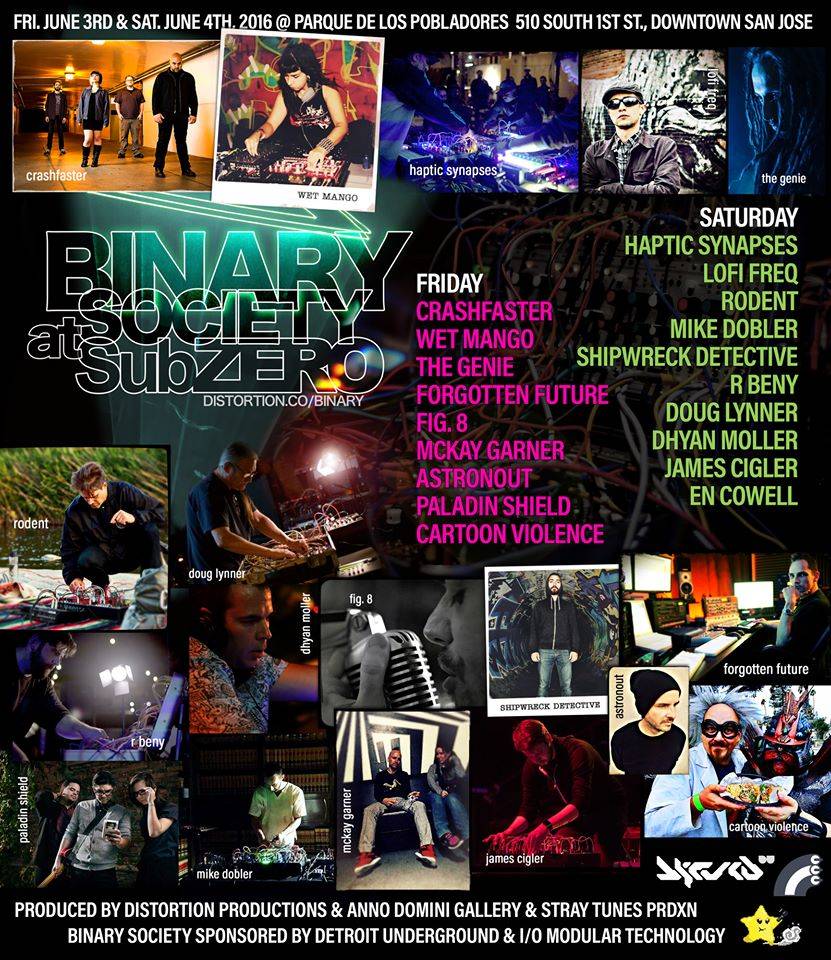
Forgotten future will be performing at the 9th SubZERO Festival in San Jose, California, on Friday, June 3rd.
The 9:50pm set will include tracks both from the forgotten future: W1 and Realignment albums. Presented by Distortion Productions, the festival will feature various artists from the ambient, electro, tech house, experimental modular and other electronic music scenes. For the list of other performers and more info, visit Distortion Productions‘ website.
I like some creators’ concepts a lot, but ironically, I’m not passionate about their music. And those artists’ music that I find exciting for stylistic or other reasons, often have a concept behind them that I can’t associate myself with – or have no concept at all.
This brings up an interesting question about the relationship between concept and taste. Should a piece of art that you find interesting have a concept that you can relate to? Does a concept that greatly interests you guarantee that you will like the art that’s formed around it? I certainly don’t think so. Yet, concepts can make a piece of art much stronger and more timeless. Concept albums ideally sprout from the exploration of feelings or ideas, opinions or facts, and express them through one or another art form. I say ideally, because technically we shouldn’t call an artwork concept-based if the work was retrofitted with a concept after it was created, but in some cases the realization or idea of meaning might actually come during or after the creative process.
Concept vs. Style
So how is it possible that I keep finding myself on either side of this equation but rarely in the intersection of them? I believe that the answer is: evolution of ideas and an organic process to create originality.
I see the “lack of finding work right in the intersection” problem as an opportunity for a natural evolution into new territories, aspiration to create the new, that will belong to that intersection – at least for some. Let’s say you love what an artist says about his/her inspirations, creative process, concepts that their music is expressing, but you don’t care for their music. It happens to me quite often that someone describes their ars poetica or creative process, which makes me excited to hear their music, but when I hear it, the music doesn’t resonate with me at all and I stop listening with disappointment. Artists, like all humans, subconsciously build their previous experiences into their own work; so what do creators do when they get inspired by a concept, feeling or idea but don’t agree with its expression? They create their own version to express it their way! Or create a variation of it. Or (sub)consciously build it into their own concepts. Either way, the result becomes something new. Like a story that gets embellished with lines borrowed from other stories and told differently every time. After a while it becomes a different story, filled with diverse roots and influences. Once you tell your own story (concept) your own way (musical expression), it should become a perfectly matched intersection between feel/idea and musical expression – at least for one listener: you. And when publicly released, the work can continue the process of influencing others by its concept (message) or by its design (music).
Is having a concept a must?
What about great music with no concept whatsoever behind it? As much as I appreciate original compositions and unique sonics (the value or originality in these is actually even measurable to a degree), I don’t think that it’s enough; I just don’t think that a conceptless album is as strong of a piece of art as the same release with a concept can be. After all, music is the most universal language (no, it’s certainly not math!) – but just beautifully speaking that language while having nothing to say isn’t appealing to me. However, once it’s expressing a message (whether abstract or concrete), the mix of that message and its expression can trigger a reaction with our own feelings (memories), which in turn can modify the intended meaning of the concept. It can effect us differently from the way it was meant to – isn’t that the basis of progression, though? Isn’t it beautiful how mutually influential the elements of concept and style can be?
One of my teachers in elementary school said, as the class was analyzing a poem, “What matters is not if you know everything about the circumstances in which the poet wrote this poem and you can analyze what he meant by every line. What matters is what the poem means to you.” So true. If it means something to you, if it effects you, it was worth creating it.
Ironically, I used to say quite often that my life is all about music, composition and sounds. Now 39 years into it I feel that music is “just” a tool, although an extremely powerful one, that we can use to communicate emotions and concepts with. However, those feelings and ideas should exist in us in the first place.
Art forms influencing each other
Another aspect of this theory that fascinates me is the cross-influence between various forms of art and expression. For example, a photograph at an exhibition might have a certain emotional effect on me. This emotion, combined (usually subconsciously) with my own related feelings can result in a new feeling, which then I express (and let my audience experience) – but not necessarily through photography, but music. Or sculpture. Or another expressive form. Thematically there might be no detectable link between the original photograph in the museum and the music track on my album, but the emotional connection (translated by my own experience of those emotions) might be extremely strong. In fact, it can be stronger than just to call it influence – it might be a variation of the same message (but without any relation to the way it was expressed by the original photographer). We could even think of it as my personal musical score to the original photograph – without having an understanding of how the photo made it’s photographer feel in the first place. But without that photo, my expression of it wouldn’t exist either.
Based on this thinking it might be unsurprising that many composers (myself included) are more influenced by other forms of art than other pieces of music. (I’m actually working on an “influence gallery” for this very website.) I believe that influence should be more about a new interpretation of the concept, the feeling, the idea (of another type of work or experience), than the kind of musical expression (style, melody, etc.) that was used to bring it to light and which you might like. Again, a photo or a country song with a strong concept might have a bigger effect on the originality of my work in electronic music, than hearing electronic music with a similar style to mine. In the latter case, I’d be more likely to subconsciously copy elements of expression (melody, harmony, rhythm, texture, performance), as opposed to be thematically influenced by an idea.
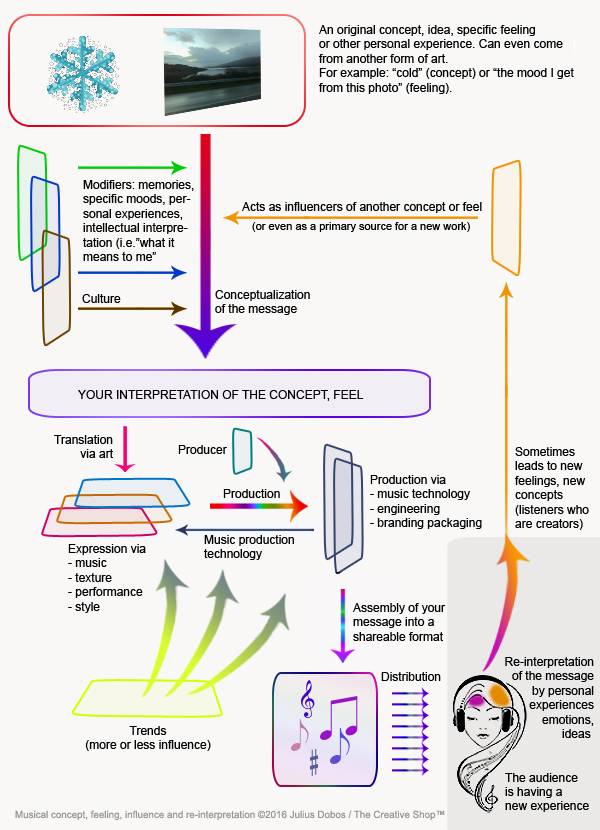
Musical concept, feeling, meaning, influence and re-interpretation. The relationship between concept albums, creators and audiences. (click to open large)
So then why do interviewers always ask about our musical influences? Isn’t that just asking about the wrong side (the language, not the story) that you might have grown up with and actually can’t get out of your subconscious? If anything, that kind of influence is actually a narrowing factor in the originality of your expression, rather than an actual influence on your message. When listening to me speaking about my music, wouldn’t you be more interested in what stories, feelings, ideas we might have in common, than what kind of music we both grew up with or enjoy listening to (the “packaging” we both prefer before we unwrap the message)?
You will see another funny thing when you look at the middle area of the diagram on the right. The parts that many producers, writers, etc. focus on the most is technology. While production technology (i.e. recording software, the engineering, the studio) can greatly influence the musical expression (hence the dark blue arrow pointing left, back from production to expression), it is a relatively small part of the overall journey, and this reverse direction (using the technology as an idea-generator and not as a tool to translate one) can even be responsible for a disconnect from the original concept… just think of those instances when a suddenly found “cool sound” caused your work to deviate from the originally intended feel.
My conclusion – and advice
Understand your own message but do let yourself be influenced by others’ interpretations.
Don’t let technology interfere in impressive but irrelevant ways – experimentation is fantastic as long as it is purposely channeled towards enhancing your initial concept.
Rather, be open to get influenced by experiences, concepts, feelings coming from other forms of art than yours. Unlike those “how to break writer’s block” articles that tell you to listen to more music of your peers, or copy the style of other composers, I suggest that you first figure out what you want to say and focus less on how you want to say it. A strong concept will inspire the “how”-s automatically.
The story of Julius’ journey from ’70s electronic music through film work to forgotten future. Hear about the ideas behind the concept in this interview with the leading US electronic music program.
“You might feel like you need a doctorate in philosophy and physics to understand Dobos’ forgotten future. Many of the concepts find him questioning culture, religion and science, including Darwinism.” – John Diliberto
Read about the philosophical and spiritual story that resulted in the birth of forgotten future
“My views don’t contradict these [various] religions: they rather focus on the larger picture than on the well-known stories and characters. I don’t really disagree with science either, I simply expand on (okay, also break) its rules in the name of progression – and in knowing that we actually know very, very little. In my idea of a Multiverse, Nature does have a central role, but it isn’t exclusively governed by the tiny percentage of laws that we have so far established based on documented experiences (i.e. science). But again, all of this doesn’t matter: the goal of forgotten future is to put its listeners in a sonic environment full of emotional details, which trigger personal memories and inspire the listeners to “wake up” and find their own answers to these questions.” – Julius Dobos
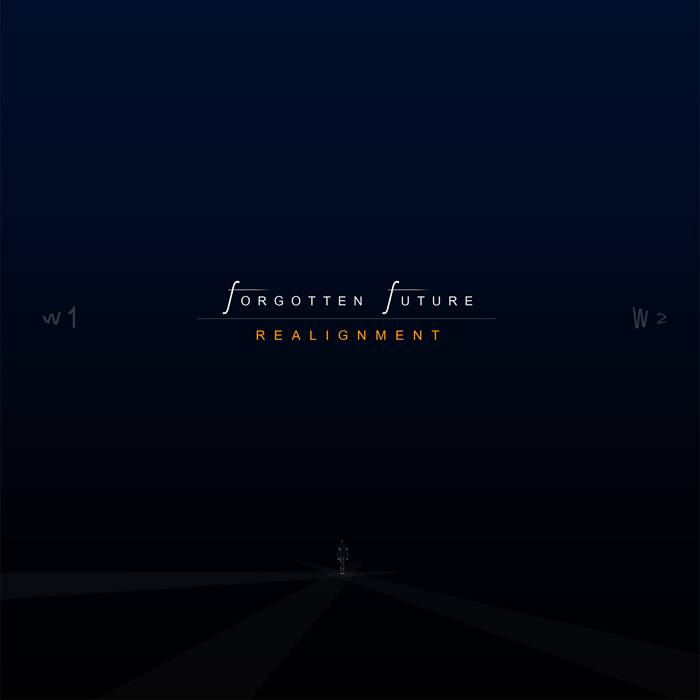
forgotten future: realignment [EP] – release coming in late March, 2016
While fans are discovering more and more of the many hidden details on their forgotten future: W1 physical album copies and in their digital booklets, only a few have realized that the edge of the disc lists more than just the 15 tracks found on the W1 album – look close and you will find four additional titles named!
Unreleased or hidden tracks? Not anymore.
We are planning the Spring, 2016 release of a brand new EP titled forgotten future: realignment, featuring these four original tracks, which were previously listed, but intentionally omitted from the album. In addition, remixes of three original ff:W1 tracks by electronic music artist-DJs forgotten future, Cubricon and BrokenSine will be featured on the EP.
The 7-track realignment will take its place between the W1 and W2 albums of the concept series, completing the journey of W1 with the cutting-edge and spacey psybient / ambient organic electronic music that fans have come to expect from forgotten future. While the EP is nearing completion, the full-length W2 is currently in the pre-production phase.
Sign up for the newsletter or check back for more news to come soon!
The first piece of the long-awaited forgotten future psybient – electronic music concept series has been released.
forgotten future: W1 is the first installment of a 4-album concept series, the framework for a musical and ideological endeavor to take the listener through Universal themes centered around four of the “big questions”. The first release in the series, W1, is exploring the question “WHAT”. Rather than being dogmatic, ff: W1 offers an environment of alternative realism for everyone to explore their “future memories” in and find their personal answers.
forgotten future W1 album cover
Excerpt from the booklet:
“forgotten future: W1 is a story of a journey – one of multiversal scale, beyond the boundaries of time and through new dimensions. It is about the journey we all take one day. We are frightened of the unknown, yet it feels so familiar… it feels like we have been in this environment before…It’s a curious and humbling experience, a galactic travel on a forgotten road that takes us to a mysterious destination, which road seems like… we must have traveled it before. And while we feel completely lost, anxious and painfully lonely out there in the vast Universe, we are ecstatic about the journey through the unimaginable, about witnessing the answers to some of the ultimate questions, and at the end, realizing that the experience was not the first one, indeed. But, returning from our voyage, we only bring the distant memories of feelings with us… forgetting the experience – which we will re-live again in the future.”
While electronic in its nature, the psybient music envelops the listener in an organic feel manifested by warm textures and and deep, open spaces sprinkled with grains of electronic tones. The ambient yet rhythmically exciting music features lush soundscapes, unique, cutting edge sounds and complex sonic layers, often monumental electronic instrumentation, dynamic song structures and haunting melodies.
More than just musical compositions, the forgotten future series is not a fictional story, rather the expression of Julius’ personal beliefs of Universal (actually, Multiversal) concepts of our existence – feelings and ideas communicated through music and sound design. While W1 introduces the listener to the framework of a belief system, which includes splinters of diverse concepts from ancient religions and modern-day science, parts 2-4 of the series will build on this framework, exploring exciting theories and convictions. Thus, signaling its importance much beyond a work of a composer, and letting the listener focus on the message rather than the messenger, forgotten future is the first (and only) moniker of Julius Dobos.
forgotten future took Julius over five years to develop, produce, and after multiple delays, release in April, 2015. The album is downloadable in various digital formats, including a 24-bit 48Khz Studio Master, and can be ordered as a CD in a premium digipak edition, complete with a full-color 20-page booklet. The booklet features the photographs and digitally painted original work of various artists, accompanying each track with its own visual environment.
UPDATE 4.17.2015 After some unexpected delays, [forgotten future: W1] is ready for its official release on April 24th! Physical album production is under way, and the interactive ff: w1 online experience is under testing. One week until availability on digital platforms, including 24-bit “studio quality” formats!
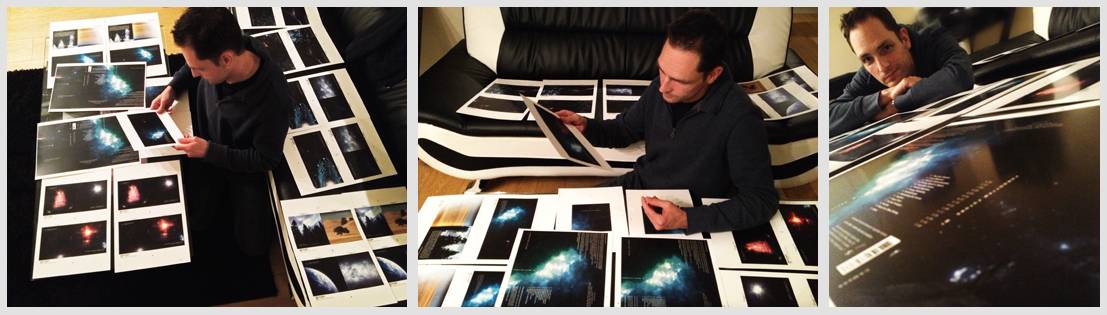
forgotten future: W1 album artwork pre-press proofing
UPDATE 01.06.2015 [forgotten future: W1] is being mastered by Robert Rich, dark ambient pioneer in Mountain View, California. After some debates and tests about bass content, we are both happy with the outcome. The album’s extensive graphic design has been completed – ff W1 is expected to be released in a few weeks.
UPDATE 11.09.2014 [forgotten future: W1] has been mixed at Studio CS and the sonics are currently being refined by Vincent Villuis at Ultimae Studio in Lyon, France. The album is expected to be released both in physical CD and digital formats in early 2015. Check back soon for more exciting news!
UPDATE 07.12.2014 Julius’ new album is nearing the mixing phase, which will take place throughout the Summer. Today, a short video showing the production of a new track was published on YouTube. The title of the new work was also announced as forgotten future: W1.
According to Julius, the psybient / ambient-electronic work “will be the conceptually most important release so far in my career”. Be sure to check back often for updates and announcements about the new project.
PRESS RELEASE
SILICON VALLEY, CA / BUDAPEST, HUNGARY — Creative Shop Music has announced a planned 2013 release of a brand new concept work by composer Julius Dobos. The large-scale work in psybient / ambient-electronic style will encompass multiple album releases.
The composition and musical sound design process started in late 2009 and has been the main focus of Dobos since. The work is expected to be a reflection of Dobos’ philosophy about the relationship of Nature, Life, the Universe and music, touching on such intriguing subjects as the existence and relativity of space and time – expressed in music and sound. The first release in the series, while electronic in nature, will build on an organic feel and warm textures. The ambient yet rhythmically exciting music will feature lush soundscapes, complex, out-of-this-world sounds, haunting melodies, powerful emotions, instrumentation form minimal to grandiose, traveling through seven unique sonic landscapes.
The planned 2012 release date of the new work, which was first announced last year, has been delayed due to the relocation of Julius’ studio, however the production is now at full steam at Studio CS. No further details or samples have been released, and the title of the work has not been made public either.
Be sure to check back often for announcements, or subscribe to the newsletter for the latest news.