|| Posts by

Natural Selection – How to Choose a Path in an a.i.-driven Music “Market Correction”

December 29th 2025  || by  || Add Reply

There is a lot of talk about how a.i.-enabled tools will destroy music and the music industry – maybe even more conversations that the topic truly deserves. Most articles on “will a.i. replace real musicians” fail from the start by not defining what success means for musicians. Number of streams? Audience recognition? Getting an award? Artistic fulfillment?

Let’s state the obvious: generative a.i. tools certainly make it easy to generate the kind of homogeneous musical content that such tools were trained on. They are excellent tools for hobbyists to enjoy the process of generating an output that they (more and more comfortably) label as music. Their main features, convenience and ease of use, naturally come with a consequence: these tools excel at their ability to increase anyone’s productivity – as long as we measure “productivity” by quantity, speed and efficiency. And while the industry might use such metrics to measure success, it is not the primary criterion for most self-respecting artists.

Tech companies are the least impartial to express how musicians think and offer their advise on how creators can succeed. Some of their business narratives are so narrow-minded, demagogic or deeply misinformed (like this one), that reading them makes me feel frustrated and ashamed to be a human at the same time. I don’t have a direct stake in the a.i. game, but as a composer whose personal and professional life has revolved around the musical arts, and also has has been using, testing, developing, lecturing about music technology for over thirty years, I felt inclined to share my angle. The goal of this article is to examine everyone’s unique role in shaping the future of music and the music industry – even the role of the audience.


Trends: Music and the Music Industry

To begin, we must separate the concept of music and the music industry – which is highly relevant to separating how “success” in music is measured by different stakeholders. While music and music industry are often discussed together, these are quite distinct concepts; sometimes even seen as dynamically contrasting ideas. It is widely known among music professionals and even among today’s well-informed listeners, that behind the phrase ‘music industry”, more “industry” than “music” has been hiding for over a century. Most musicians argue that this uneven ratio has gotten even more out of balance over the past decades – and often blame the industry’s greed for it. (I don’t disagree about the detrimental effect of corporate greed, but would also add most creators’ egos to the core causes.)

The critics of this view regularly cite classic-era composers to prove their point, arguing that the “industry” aspect has always been part of the success of well-known composers. While it is true that networking, promotion, etc. were partial reasons behind their popularity, the music marketers of today often overlook some important details. First, Haydn, Mozart, Beethoven (or Bach, for that matter) might have been excellent service providers and promoters, but they also had to be quite good composers to begin with. It wasn’t their tools, rather their talent, skills, personal approach and experience that gave them the ability to create original, quality content. Most average composers, even if they had excelled at networking and promoting their average content, wouldn’t have survived in the music business of the 18th Century.

Secondly, the opposite is also true: there have been tons of original, high-quality content that didn’t see the light of day due to lack of promotion, keeping their creators hidden in the shadows of music history, yet, their lack of fan-base did not diminish the greatness of their work. Unlinking quality from popularity shows how the success of a composer measured in original and high quality output has little to do with the success of the same composer measured in financial goals and popularity. Therefore, the effects of a.i.-enabled tools on music vs the music industry should be also measured distinctly.


Change in Music Technology is Inevitable, but…

I happen to believe that it isn’t technology itself, but the ways new technologies are designed and encouraged to be used are what have resulted in the generation of more junk than even pop culture can swallow. Most (not all, but most) toolmakers focusing on profit via providing musicians with convenience and efficiency has been driving the direction of the music tech industry for at last 40 years. Whether we blame the designer or the user for this direction, a.i.-enabled tools are taking this to the extreme. They will erase some musician careers but might also be part of the solution for a much needed curation in the musical arts – a sort of natural selection. Let me explain.

In the 1960s it took as much (or more) skill to use a new guitar or a new synthesizer than a guitar or piano a hundred years before that. However, this can’t be said about the recent decades; too many tools since the 1980s have aimed at convenience, replacing talent and skill. For composers, performers, songwriters, such idiot-proof technologies have come in many forms (e.g. midi-loops, chord analyzers, auto-tune, trackspacer, auto-mixers, etc.). The democratization of distribution services (redesigned to support streaming, the most destructive model ever created), while beneficial for professionals, saturated the market with heaps of sub-standard content, diluting quality and the perceived value of music itself. (Spotify took this to the lowest level by enabling users to record any full-length album for 1.8 cents).

The most frequent argument I hear in favor or a.i. tools in music is that technology has always shaped music, whether it’s the evolution of electronic instruments or digital production tools. Some use cliche examples, like drum machines that didn’t replace drummers, sequencers that put keyboard players out of work, auto-tune that didn’t replace vocalists, and so on. These are quite poor comparisons that got old years ago. Where they all miss the point: virtually all of these past technological inventions changed the tools we used to create music, or effected how we used them. However, a.i. is not changing how a creator works, but replaces the ideators, the sources of musical concept, the creators themselves. It is not technology that reforms “the old ways” – or any ways; it is technology with the power to replace the user behind it.

Let that sink in for a second, please – this is why a.i. tools are in fact dissimilar to all disruptions we have dealt with before. Mix in the modern human’s desire for convenience, instant gratification and hunger for self-validation, and the result is a further shift of the (already upset) balance from carefully-crafted musical art to efficiently mass-made products.  But, there is also a silver lining.


Use or Resist a.i.-enabled Tools? It Depends on Your Goals.

Different people have different relationships with music. Their goals and the means to reach them can greatly vary as well.

I’ve discussed a.i.’s effect on music on various industry panels (most recently in AI vs the Audio and Music Professional in 2020 and in 2024, resp.) with diverse sets of experts. They included Maya Ackerman (computer scientist), Jonathan Wyner and Shahan Nercessian (iZotope), Alex Wankhammer (sonible) Nahuel Bronzini (mixing engineer), David Bowles (recording engineer), the late Steven Albini (record producer), Ken Felton (immersive audio technologist), Jean-Marc Jot (immersive audio technologist) and other professionals from music, technology or the music business. Back in 2020, we disagreed about the looming negative impact of a.i. on music, which became reality by 2024, the year of our second panel. Our second panel’s most pessimistic predictions became reality by mid-2025. Most tellingly, proponents of a.i. tools in music focused on benefits like convenience, business opportunities and the democratization of access (music as hobby), while panelists opposing the use of such technologies were more concerned with its negative effects on deeper human expression and ultimately, cultural standards.

I’m all for the democratization of tools of self-expression, but I do not support the false premise that new tools will turn casual users into artists. While I do not think that art should be reserved for a qualified few to create, I do believe that random products of casual self-entertainment should be distinguished from thoughtfully conceptualized & expressed works of art. Users who rely on cliche formulas to generate shallow imitations should not wear the same title (e.g. composer) as creators who invest in developing and refining their skills and commit to their craft for life. It’s time to acknowledge that creating music is not for everyone.

I was fully against a.i.-enabled music tech and saw no benefit to anyone back then. I understood the point of both its haters and supporters – but had three issues with it:

1. The suppression of originality / devaluation of the arts: generative music a.i. is built on the porridge made from the most promoted (therefore most over-played) music of the past, hence it serves up the cliches we had created over the past decades – or at best, repackages them as reusable building blocks. The inherent qualitative failure of a.i.-generated “music” lies in the way it’s constructed: the more widely such building blocks have been used (i.e. in more songs that became popular), the more likely they will end up in a.i.-generated content. It’s a self-feeding mechanism: it utilizes the most popular solutions, generates the safest, least innovative variations, then feeds the results back into the algorithm to fine-tune itself to offer increasingly more predictable popular variations. Do we really need more of the same aesthetically super-narrow cliches that labels have been showing down our throats for decades? I don’t think so – but the general audience who likes convenience and familiarity, might disagree. (This is also why the argument that a.i. algorithms learn audience preferences is a very backwards one.) In this aspect, the music industry wins, music and culture suffer.

2. Lack of concept, cultural context and personal expression: a.i. might be capable of generating entertaining content, even better quality content than some amateurish human-made music can be. However, a.i. does not “believe” in what it creates (unlike our best musicians). It might serve up logical solutions based on the context it is fed, but it has never experienced any cultural context or even artifacts. Where is the history, suffering, love, devotion, etc. – all that we experience – expressed in generated content? Personal interpretation and expression through art is what makes each artist unique – it’s not about logic and data, it’s about the expression of a concept formed by our individual lived experience. (And such personal expressions are even present in the millimeter-accurate and millisecond-timed decisions one makes when playing an instrument).

3. Emotional quantization: like in all digital systems, values are assigned on a stepped numerical scale in generative music. However small the steps are, there are always gaps between them (fractions of the smallest values in any code). The nuances of human emotions, and their expressions, are not based on values but are fluid and infinitely refined, “analog”. Just think of an already-nuanced feeling like bittersweet; each time you experience it, it is something different. Also, these multi-dimensional qualities are cross-dependent on one other (what type of bitter, what kind of sweet), dynamically influencing the outcome, often without logic. And then we haven’t even added the personal-contextual variables which further limit their assessment and imitation via code.

While I used to see these as “issues”, I see them now as reality that might actually lead to natural selection in today’s impostor-ridden music landscape. The question is: who will be effected and how.


Music and a.i.: Natural Selection

How about, for once, not ranking composers, musicians, songwriters, performers based on their position in the hierarchy of the music industry, but based on their level of artistic development? The ongoing changes are already reshaping the three fundamental creator segments:

• Hobbyists. The output quality of this suddenly expanded segment is getting close to the advanced creators’ output. Given that they see music as a delivery system for entertainment and/or for their self-expression, it is an opportunity for them and for the tech industry to offer them a.i.-supported services (e.g. writing assistance) – and with that, the illusion of possessing writing skills.

• Advanced creators. They are at the highest risk as the value of their advanced skills is diminishing. The a.i. music revolution is their new competition, so in order to keep their position, they are forced to adapt and utilize the new tools. Unfortunately, this comes at the price of (knowingly or unknowingly) lowering their standards as they their segment will devolve artistically. Otherwise their options are limited as they must cater to a pragmatic clientele or to an unassuming general audience. However, the most committed creators in this segment also have the opportunity to move “upwards” by developing into a top-tier artist (see diagram below).

•  Top-tier artists (defined here in terms of level of artistry, not revenue). For this narrow segment, a.i.’s effect is minimal; if anything, it’s pushing them to raise artistic standards. It is their suddenly accelerated opportunity to deepen their artistry NOW and evolve their individual style without a.i. (rather than re-invent themselves using a.i. – contrary to the generic advice of tech professionals). They only risk sliding down into the new abyss of well-packaged generic content if they get complacent with their own personal expression that has served them this far.

Maybe all this isn’t a bad thing for music overall. On the upside, the best will have to further improve, the mediocre will use a.i. to compete in a faster-paced, less-musical new segment. The respect of real music might return to where it was in the mid-20th Century, driven by an technological over-compensation for democratization. I think of it as a sort of music market correction. On the downside, the new music industry will likely flood the mainstream with an unlimited supply of a.i. mediocrity, regurgitated cliches and shallow imitations.

Complex effects of an a.i.-driven music industry vs human artistry and originality.

Natural selection and music market correction in an a.i.-infested music industry shift.

For conceptual originality and the expression of individuality, a human is required. The fate of the music industry is not in the creators’ and not even in the companies’ hands: it’s in the listeners’ hands. Whether that’s a good or bad thing, time will tell. Different listener segments expect creations at different artistic standards from different creators – therefore, every stakeholder has a different reason to adapt to the changing landscape.


Music is heading for an a.i. “Market Correction”

Since the 1980s, technology has made it “too easy” for many untrained writers working only on the surface of the quality and skill level that was previously expected in the musical arts. It has become the new norm to create seemingly original musical content that seemingly expressed deep layers. In reality, modern musical arts have become complacent with shallow imitations of the actual artistic depth and nuance found in sincerely designed and expressed works of top-tier creators. For them, music was never just a delivery mechanism but the core of their personality. Those who desperately relied on the assistance of technology due to their lack of skills, talent, artistic concept or commitment, quickly evolved into Advanced Creators (see the segment above). Conversely, the same technology only enhanced real artists’ concepts and sincere expressions, representing the best of the modern music culture.

However, over time, the lines got blurred between these segments; as advanced creators claimed their place in the top-tier artist segment, the general audience was getting heavily conditioned by packaging (production) and popularity (industry). The result: the majority of today’s listeners think that the more products an artist sells, the better they are at their craft (i.e. top-tier creators are likely with major labels). Yet, reality shows us that there is close to no correlation between a musician’s artistic quality and their position in the hierarchy of the music industry.

Now with a.i. bringing generic solutions and leveling the playing field for all but the truly original outstanding individual creator, top tier artists must work harder to separate themselves from the new, unified segment of mediocrity. While the advanced creators understandably fear a.i.-tools’ impact on their position, risking to be consumed by the new segment of mediocrity, they are faced with the true value of their art, their own humility and commitment to improve it.

How? Sincere and committed creators can grow by seriously improving the originality of their concepts, the individuality of their expressions, and the contexts within which they create – the areas a.i. tools are at an inherent disadvantage.

However, another important step for the new top-tier of artists to prevail is the elevation of the audience’s standards. This is not just an opportunity for them but for the the musical arts and culture. This can only take place through education – which is possibly the biggest challenge, given our recent trends of sinking appreciation of the arts and pragmatic priorities. The a new audience, the task is not unlike learning what to appreciate in a Monet painting beyond the obvious. Characteristic brush strokes are an easily observable, learnable and even imitable technique – relatively easy tasks for the general public or for an advanced a.i. engine. But, internalizing the painter’s personal intent with making the painting and every bit of passionate detail and emotional context behind each brush stroke on it takes far more attention, context, and a deep sensitivity – certainly more than code ever will be capable of. It requires a first-hand experience of the human condition.
Spatial Composition – and What It Means for Immersive Audio Production

November 3rd 2024  || by  || Add Reply


Abstract

Immersive audio is an important concept in our listening experience as we enjoy films, games and other audio content. In musical works, while the concept of multichannel formats is not new, spatial audio technologies have been far underutilized in the inception of content; technologies such as ambisonics, wave field synthesis, object-based audio are, with an overwhelmingly wide margin, used in the recording, mixing and mastering stages of music production today. These spatial audio technologies are usually applied during music production; after the music creation but before the exhibition (performance or playback) phases, with spatial decisions typically made during the mixing process, often in absence of a spatial-musical concept. Here we propose the consideration of space as a compositional, rather than production element of music. We examine how its use in the earliest phase of conceptual design has a substantial effect on the composition itself.

Focusing on the creative possibilities offered by spatial audio design, what if decisions such as an instrument’s location or its movement in space were not made during audio production by engineers, but rather, they were design choices made by composers prior to production, during the composition phase? Composers utilize melody, harmony, rhythm (and often timbre) to express a musical idea and evoke emotions – what if such ideas could be also shaped or even inspired by spatial location, area, position or movement? Would such space-derived decisions about notes, timbres and the roles of musical parts be the same if they were made at the time of composition, rather than during audio production? And, even more interestingly, would making spatial decisions during the composition process have a bearing on the musical message itself?

This paper explores, through an elaborately conceptualized and documented composition test process, via the analysis of the resulting stereo and spatial compositions, and through the evaluation of focus group feedback from comparative listening sessions, how various spatial environments can shape compositional design. The paper discusses the consequences of using immersive technologies in the earliest phases of music production and recommends best practices to impactfully express spatial-musical concepts. It concludes with the analysis of the advantages and drawbacks of using space as a compositional element and proposes approaches to consider in the future practice of spatial music composition.

[Read the paper preprint here]
Published: November, 2024
Last revised: September, 2025


[TL;DR – additional notes]

Here are my main conclusions from the research:

  • Space is a potent and influential element to use in composition, indeed, now practically joining melody, harmony, rhythm and timbre
  • Focus group participants preferred music composed in a spatial environment vs stereo environment
  • Listeners found the spatial composition to be more exciting, while the comparable traditional (stereo) composition more beautiful
  • The more spatial elements are used in composition, the more likely melody and harmony will receive less focus
  • Spatial composition encourages more rhythmic and melodic movement
  • Composing in/for traditional (stereo) space promotes less melodic movement but more reliance, therefore focus, on melodic expression
  • Spatial composition is more likely to inspire fragmented melodies (shorter melodic arcs, shorter phrasing)
  • Spatial composition promotes the use of complex polyrhythms
  • Timbre is the intrinsic musical component least effected by the introduction of the spatial element
  • Space is still not an intrinsic quality of a note, but it is indeed an intrinsic quality of the relationship of 2 notes
  • Spatial audio productions should prioritize conceptual choices made by music composers over mixing choices; engineers should enhance musical spatial concepts during production
  • While the broad acceptance of space as a conceptual element of composition grows slowly, we can already see its non-conceptual (and in some cases even harmful) use in production
  • Spatial composition offers opportunities for future real-time spatial performances

What Would Electronic Music Be Like Today, if Kraftwerk Hadn’t Popped? (Questions from my Electronic Music Students)

December 16th 2023  || by  || Add Reply

I get a fair amount of questions from the students in my UEMP (Ultimate Electronic Music Production) course each year. Often these are questions about specific genres or production approaches or synths. This Fall, though, I got some bigger-picture ones, so why not share a couple of the answers here.

Q:  “Would it be possible to create another branch on the tree [of origins of electronic music] in our modern world of electronic music?”

A:  Technically and in theory everything is possible. Practically, quite difficult; it’s difficult to not be fundamentally influenced by what we already know. I believe a completely new, thick branch (directly growing out of the double-trunk of the Electronic Music Tree rooted in France and Germany) will / can only be grown by a non-musician artist, from another discipline, like painting, sculpture, dance or poetry. One could argue that Schaeffer, Stockhausen, etc. made significant progress thank to their not-purely-musical interests. The less someone is exposed to music, the more likely they won’t be influenced by the genres already out there (any existing “branches”), especially the 1950s-70s roots, and can think artistically but freely. The only time the origins of an entirely new direction in electronic music was not tied to the 70s and was a musical in its source (Jamaica), was Jungle (then Drum & Bass) in the early ’90s.  The unrelated components being in the right time and place and actually cross-influencing one another – such coincidental cultural collaborations are uncommon in today’s too-multinational world. Though, maybe we could still give a Model D and a zoom recorder to the indigenous tribes of the Amazon who live far away from modern civilizations, collaborate with them and see what comes out of it…

At the same time, a new smaller branch (a branch growing out of a large branch of the tree) might come from a musically-oriented (trained or not) person in a different musical environment (possibly not even electronic music). Again, the less they know about electronic music, the less likely they will be effected by what has existed before them, thus, the more likely they will create something uninfluenced by existing electronic music. Still, it’s likely that we will be able to trance the results back to one of the main trunks of the tree (i.e. GRM, BBC, JMJ, Kraftwek, Vangelis, Tomita, Eno, etc.).

Like I often say in the beginning of UEMP semesters: the technology to create something groundbreaking and original intentionally break has been in front of us, for many years. Powerful computers and more free plugins that one could explore in a lifetime are now in our pockets. Affordable technology to write the music of the future is reality, even for the average college student. But you have to fight the part of your DNA that always makes you create music similarly to the way you normally create and listen. Producing Musique concrète has the ability to take you very far from all that…  listen to your Musique concrète work a half year later and you might be surprised by what you had created. An inspiring point to start from.

Q: “If Kraftwerk hadn’t popped when they did, how do you think things would have turned out for electronic music?”
– and –
Q: If Kraftwerk had never existed, where do you think electronic music would be today? Would it be at a previous point on the electronic music timeline or would it have gone in a completely different direction?

A: Well, I’m not that old to have been there… I was a small kid playing the piano in the 80s when Kraftwerk had been already around for a decade and well-known in Europe… so their influence on most everything-in-4/4 in electronic music was a done deal by then. But I’ll take a stab at hypothesizing about this fascinating proposition.

It is truly interesting to think about what would have happened to electronic music if Krafwerk’s Autobahn wouldn’t have received much attention, or hadn’t even been released… or if Ralf und Florian wouldn’t have met or even existed. Well, let’s break this down based on the components that Kraftwerk combined into a pioneering new direction in electronic music:

  • The 4/4 time signature would have become popular in electronic music in some fashion anyway, since it was the middle ages’ 2/4 folk dance rhythms then the ’60s disco’s straightforward patterns that evolved into 4/4 dance-able rhythms – the point being dance-able – in other genres as well.
  • Sequenced, quantized basslines and arps would have been sooner or later migrated from Jarre’s and Schultze’s kitchen to other, more rhythm-based genres. Kraftwerk was inspired by the persistent, “quantized” action of mechanical machines, but certainly not the only one who got inspiration from heavy industries.
  • Vocoders were in use even before Kraftwerk, although without the band and its influence on others (e.g. YMO, Moroder), vocoders might have actually disappeared earlier.
  • Minimalism in itself was around in painting, sculpture, architecture, film-making, etc. before the 1970s (let alone the concept of wabi-sabi from centuries before). Terry Riley was already active before Kraftwerk and other musical creators of the ’70s were also making very different type of music on minimalist principles (e.g. Brian Eno’s ambient).
  • The idea of “robots” making music…  now this was a big one. It was big because this concept was able to connect the minimal aesthetic with most people, who were curious about the future. And when I say people, I mean nearly everyone – just think about all the major sci-fi movie franchises that originated in the 70s. Shortly after the Moon landing and with portable computers starting to appear, it was the perfect timing for everyone to entertain the idea “The Future is Now”.  Thank to people’s curiosity about robots and robot-like musicians, unlike “untouchable” high-artists and abstract minimalists, Kraftwerk was able to bring minimalism into the mainstream. This is the aspect without which I’m not sure if the band’s music would have had the same enormous influence on popular electronic music. And without that, the genres that later evolved (and still evolve) from Kraftwerk’s aesthetic (first and foremost techno and its derivatives) might exist only as minor, underground sub-genres these days.
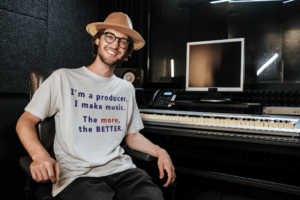
YMO Solid State Survivor electronic music theory

Yellow Magic Orchestra was, self-admittedly, the Japanese version of the German robots. What if these gentle “robots” infused in jazz chords would have broken into the mainstream before Kraftwerk, and Dusseldorf would have only remained a national treasure?

I believe that without Kraftwerk, the precision and angular German-ness might be present only in a smaller proportion in electronic music. Four-on-the-floor wouldn’t automatically mean that it’s quantized kicks on downbeats, sequenced basslines wouldn’t be necessarily repeated as 1/8th or 1/16th notes or as octave-alternating straightforward sequences, bass lines wouldn’t predominantly have short decay and very short-release VCA envelopes – as they often do today. In other words, a higher proportion of electronic music would be less “tight”, and maybe more… …French.  Maybe softer, likely more textural, probably groovy and rhythmically varied yet easily dance-able genres would be the default “EDM”. That is, at least until 1990 and DnB in the U.K. and later in 2010 Skrillex bringing rhythm-based electronic music into the U.S. mainstream. (But wait, would DnB have been the same without the counter-culture role it had in Eurodance times? And, would Skrillex have made the same debut album in 2010 without the influence of Kraftwerk-and-techno on baby Sonny during the 1990s?  This is the paradox of synthception…  noone knows…  but likely, he’d be shredding metal today.)

In any case, while Germany’s influence was successfully pushed back in other areas during the 20th Century, they might have unknowingly won the long-term cultural influence on electronic music. (And Dusseldorf’s direction was relatable by many, far more than Berlin’s high art.) Their sharp character has influenced other areas as well; just think about cars. The passionate and adventurous Italians’ slogans are “Only those who dare, truly live – We are the Competition.” (Ferrari), and “Expect the Unexpected” (Lamborghini). Meanwhile, BMW’s slogan since WW2 has been “The Ultimate Driving Machine” (despite of this being a enormous lie). The automotive world could have been as graceful without the past 30 years’ German cars as the world of modern Japanese robots is without German robots in it.

I truly love the music of Kraftwerk and I’m glad that it got popular. Though looking at their influence today, maybe too popular?

An even more interesting conundrum is the role of counter-culture. Let’s say, if without Kraftwerk, electronic music would have evolved to be less quantized and less “raw” during the past 5 decades, would various types of non-electronic music have tried to counteract it less? With Disco Demolition Night never taking place, Afrika Bambaataa not having anything to steal, the Pet Shop Boys playing bass on bass guitar, and DJs having to know at least a little bit about harmonies, electronic music skeptics haters would have had to look for different targets… or just chill and make even more rock and pop. If a softer, more romantic form of electronic music had been the norm throughout the 1980s and ’90s, would have a different set of genres become more minimal, tight, quantized, aggressive by now? Or would we have reached the current aesthetic of block-y, rigid on/off notes in electronic music anyway, given the black-or-white binarity that’s already woven into so many areas of our overly-practical life today? This is as big of a philosophical question as you can expect to face when you hypothetically re-write the history of electronic music…  so I’d rather look for the answers from Nietzsche Descartes.

Where is the Music?

September 11th 2022  || by  || Add Reply

Did the covid pandemic help to produce more or better, fresher music?

Since the 2020 onset of the pandemic, I had to change aspects of my lifestyle and many plans — like most everyone else.  Although my 2020/21 music performances had to be canceled and I even moved my lectures online, I’ve had the opportunity to catch up on giving talks, interview and join panels during the past couple of years. The topics ranged from music production, sound synthesis, performance technology to the culture of music and sound, fan events, directions in film scoring and even representing my anti-AI principles at a prestigious audio panel for the Audio Engineering Society.

It’s great to talk at industry events and panels, but what I enjoy about “prosumer” audiences, up and coming music people, is their non-pretentious huger for knowledge and creatively interesting questions. A topic I spoke about for a small and intimate audience at the Silicon Valley Music Production Summit last year is a good example of how to avoid the same old formula questions and talk about some fresh ideas, uncensored by cultural expectations. Its high point was my compositional justification for considering a recent pop tune “better music” than one of Mozart’s well-known works.

Unlike the rest of the music-making community, I did not use the unexpectedly available home-bound time to “write a song a day”. I did not jump on fb/IG to offer music production workshops to the masses, even though, suddenly every other human with no real production experience became a “music producer” in 2020… Nor did I purchase production gear to upgrade my studio to “perfect my sound” during the downtime – apparently, everyone else did, as Sweetwater closed a year of record profits. I didn’t even finish my long-long due forgotten future: W2 album.

What I did instead was the opposite: I listened. let me explain.

bedroom producer

“I had nothinig else to do under the lockdown, so I made tracks… lots of new tracks! I got many clicks so now I’m teaching other producers how to produce music… lots of it!”

Do we really need a few million new tracks every day?

It’s great that people now have very affordable tools to create music – the process should be certainly available for all to enjoy. But distributing all the “tracks” that most anyone now who knows how to use a computer can “produce” overnight, might not be what humanity needs. See, the problem is not the quantity, but the quality of the great majority of that huge quantity. Placing technology first and music second unsurprisingly results in very similar output from a diverse range of people, which usually lack authenticity and originality. I consider production mainly as packaging for musical ideas. Starting with the packaging (and even doing that mainly by copying the “experts” of packaging) will unlikely allow for injecting great content into the finished package after the fact. And, you know what tons of empty packaging is… trash. To me, this is a simple equation: quality and quantity are diametrically opposed concepts.

Lots of good music takes time

On top of the quantity issue, some things just take time; no pandemic can force us, at at least not directly, to be more productive at the same quality standards. I’m not questioning the production quality of a high-output “producer” (although with continuous production, dilution is bound to happen). Nor am I suggesting that good work has to take years. What I am suggesting is a balance between absorbing and expressing, like a good conversation. There must be some kind of emotional input in order for us to create an emotional output. The input can be a feeling, an event, a situation, whatever effects us. The output is what we express in our own voice, whether that be through music, painting or another art form. Processing too many emotions too quickly may simply not allow us to fully and deeply absorb them. Similarly, we can’t expect ourselves to create interesting content if we don’t have enough emotional input to begin with. Forcing this natural process of absorption-expression for the sake of higher productivity will inevitably produce more but shallower art.

I for sure would not be opposed to hearing fewer new releases but fresher, more original music. I well remember attending a platinum producers’ panel at a major audio convention. After talking about the old vs new in music production techniques for an hour, one of the more seasoned producers ended the panel with the rhetorical question: “But where is the music today!?”.

That was in 2012. Now, ten years later, the question is more relevant than ever.


The Saddest Moment in the World of Electronic Music: Vangelis

May 19th 2022  || by  || Add Reply

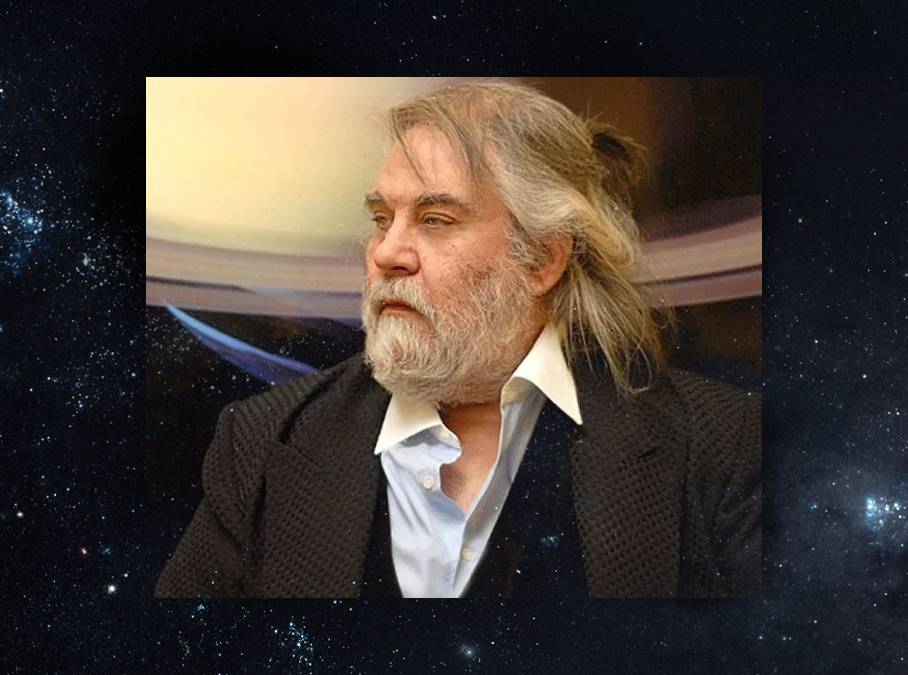
As a major proponent of individuality and as someone who strives for maximum originality, I rarely speak about my influences. It’s virtually impossible for any composer, musician, performer to not be influenced, consciously or subconsciously, by others who came before them. Often, we don’t talk about them openly, simply to minimize the unnecessary comparisons between their and our work – but they’re there. I owe so much to the exceptional composer, the incomparable Vangelis, on so many levels, that I can only feel right if I express my deepest appreciation for him, his music, and share my sadness about his passing in a tribute on these pages.

Vangelis - a Tribute by Composer Julius Dobos


Vangelis
was my biggest influence as a composer and as a human, for 40+ years. I would not be where I am as a composer, if it wasn’t for the effect of his music on me as a child – and ever since. I vividly remember listening to the full Chariots of Fire album in headphones when going to bed, before I could reach the pedals of my piano. I was mesmerized by his music, the sounds, the feel and emotions that the long track on side 2 evoked; it effected me not only musically and emotionally, but in ways that actually shaped who I became as a person. In later years, after gaining experience through my own album releases and scores, discovering Vangelis’ statements about the music industry, which I fully shared, his views on technology, people, art, expression, unobtrusiveness, resonated with me as much as his music.

There are too many personal and intimate stories throughout my life to share that connected me, sometimes miraculously coincidentally, to him through his music. Just a couple of weeks ago I was on the phone with his best synthesist, reminiscing about his wonderful ways with people…   I am lecturing about his enormously influential work in my Ultimate Electronic Music course at USV in just a couple of weeks – as I do every year…  he’s been a deep part of my world for as long as I can remember music. More than to any other creator of honest music, I wish I had had the opportunity to express my gratitude to him in person.

The world has gotten poorer this week – and I mean this literally. He has created a new universe of music, or as he would say, he presented the music of the universe to us.

His work stops here, even though his music lives on. While he inspired so many, it is impossible to genuinely come even close to his musical expression. However, his legacy reaches far beyond music. The philosophies he shared with the world, and not just about music but about ourselves as humans, are like seeds. Seeds of thoughts, approaches, attitudes that he had planted and grew into a lush forest of musical dimension of his own. Although his list of his albums, scores, performances don’t expand any longer, molecules of these seeds have become part of the genetics of art, philosophy, culture, and musical expression, spreading all over the world through true creativity. And for composers, some of these powerful molecules are now part of our own genes, ensuring that the legacy of Vangelis continues to spread wider and farther as we create new music.

Please join me in cherishing Vangelis’ impact on our world, the human culture, and celebrate his new journey beyond our existence with Procession from his album, The City.

[embedyt] https://www.youtube.com/watch?v=fBva3nnCMvA[/embedyt]


  • Re-End Prologue
  • forgotten future W1 (2015)
  • https://www.juliusdobos.com/wp-content/uploads/2019/07/ff-W1.jpg
  • ALL CATEGORIES
  • https://www.juliusdobos.com/musicmp3/re-end-prologue.mp3
  • https://www.juliusdobos.com/musicmp3/re-end-prologue.mp3
  • Guts' Epic Fight Theme (Berserk)
  • Julius Dobos (2021)
  • https://www.juliusdobos.com/wp-content/uploads/2021/10/Guts.jpg
  • ALL CATEGORIES
  • https://www.juliusdobos.com/musicmp3/Guts Epic Fight Theme (shortened).mp3
  • https://www.juliusdobos.com/musicmp3/Guts Epic Fight Theme (shortened).mp3
  • Siggraph Event Theme & Show
  • Siggraph (2019)
  • https://www.juliusdobos.com/wp-content/uploads/2019/07/Siggraph-19-logo.jpg
  • ALL CATEGORIES
  • https://www.juliusdobos.com/musicmp3/2019 Real-Time Live Show.mp3
  • Parallell Realities Epic Monk Rmx Live
  • Live in California (2017)
  • https://www.juliusdobos.com/wp-content/uploads/2019/07/Live-in-CA.jpg
  • ALL CATEGORIES
  • https://www.juliusdobos.com/musicmp3/Live_in_CA_sample_2.mp3
  • Short Message
  • from Connecting Images (1998)
  • https://www.juliusdobos.com/wp-content/uploads/2019/07/Connecting-Images.jpg
  • ALL CATEGORIES
  • https://www.juliusdobos.com/musicmp3/shortmessage.mp3
  • https://www.juliusdobos.com/musicmp3/shortmessage.mp3
  • Live in California (sample)
  • Live in California (2017)
  • https://www.juliusdobos.com/wp-content/uploads/2019/07/Live-in-CA.jpg
  • ALL CATEGORIES
  • https://www.juliusdobos.com//musicmp3/Live_in_CA_sample_1.mp3
  • https://www.juliusdobos.com//musicmp3/Live_in_CA_sample_1.mp3
  • Another Present
  • Realignment (2016)
  • https://www.juliusdobos.com/wp-content/uploads/2019/07/Realignment.jpg
  • ALL CATEGORIES
  • https://www.juliusdobos.com/musicmp3/another-present.mp3
  • https://www.juliusdobos.com/musicmp3/another-present.mp3
  • Witnessing the Forces
  • forgotten future W1 (2015)
  • https://www.juliusdobos.com/wp-content/uploads/2019/07/ff-W1.jpg
  • ALL CATEGORIES
  • https://www.juliusdobos.com/musicmp3/witnessing-the-forces.mp3
  • https://www.juliusdobos.com/musicmp3/witnessing-the-forces.mp3
  • Hymn to The Fukushima 50
  • Lost Tracks (2011)
  • https://www.juliusdobos.com/wp-content/uploads/2019/07/Juius-Dobos-lost-tracks.jpg
  • ALL CATEGORIES
  • https://www.juliusdobos.com/musicmp3/f50preview.mp3
  • https://www.juliusdobos.com/musicmp3/f50preview.mp3
  • Ultimate Mission
  • The Lost Tracks (2011)
  • https://www.juliusdobos.com/wp-content/uploads/2019/07/Juius-Dobos-lost-tracks.jpg
  • ALL CATEGORIES
  • https://www.juliusdobos.com/musicmp3/ultimatemission.mp3
  • https://www.juliusdobos.com/musicmp3/ultimatemission.mp3
  • Puzzletime
  • Transitions (2010)
  • https://www.juliusdobos.com/wp-content/uploads/2019/07/transitions.jpg
  • ALL CATEGORIES
  • https://www.juliusdobos.com/musicmp3/puzzletime.mp3
  • https://www.juliusdobos.com/musicmp3/puzzletime.mp3
  • Walk
  • The Lost Tracks (2007)
  • https://www.juliusdobos.com/wp-content/uploads/2019/07/Juius-Dobos-lost-tracks.jpg
  • ALL CATEGORIES
  • https://www.juliusdobos.com/musicmp3/walk.mp3
  • https://www.juliusdobos.com/musicmp3/walk.mp3
  • Adventure
  • Mountain Flying (1999)
  • https://www.juliusdobos.com/wp-content/uploads/2019/07/Mountain-Flying.jpg
  • ALL CATEGORIES
  • https://www.juliusdobos.com/musicmp3/adventure.mp3
  • https://www.juliusdobos.com/musicmp3/adventure.mp3